
Your next product launch or trade show is a stage. Interactive 3D turns it into an experience your buyers can explore, understand and remember, long after the show floor goes quiet. This 10-step guide shows you how to plan, build and get lasting value from interactive 3D at B2B events, with examples from Stereoscape’s projects.
Key takeaways
- Trade shows are back, and visitors come to discover new products and get hands-on with them.
- Interactive 3D lets buyers explore even the largest and hardest-to-explain products, from the big picture down to the technical detail.
- The same experience works at the stand, on your website and in sales meetings: one source for every channel.
- Success starts with clear goals, your own experts and a design built for a busy show floor.
- Choose the technology that fits your goals rather than the flashiest one, and a partner who can build it.
- Built-in analytics show what interested visitors most and help prove the return on your event.
Why interactive 3D, and why now?

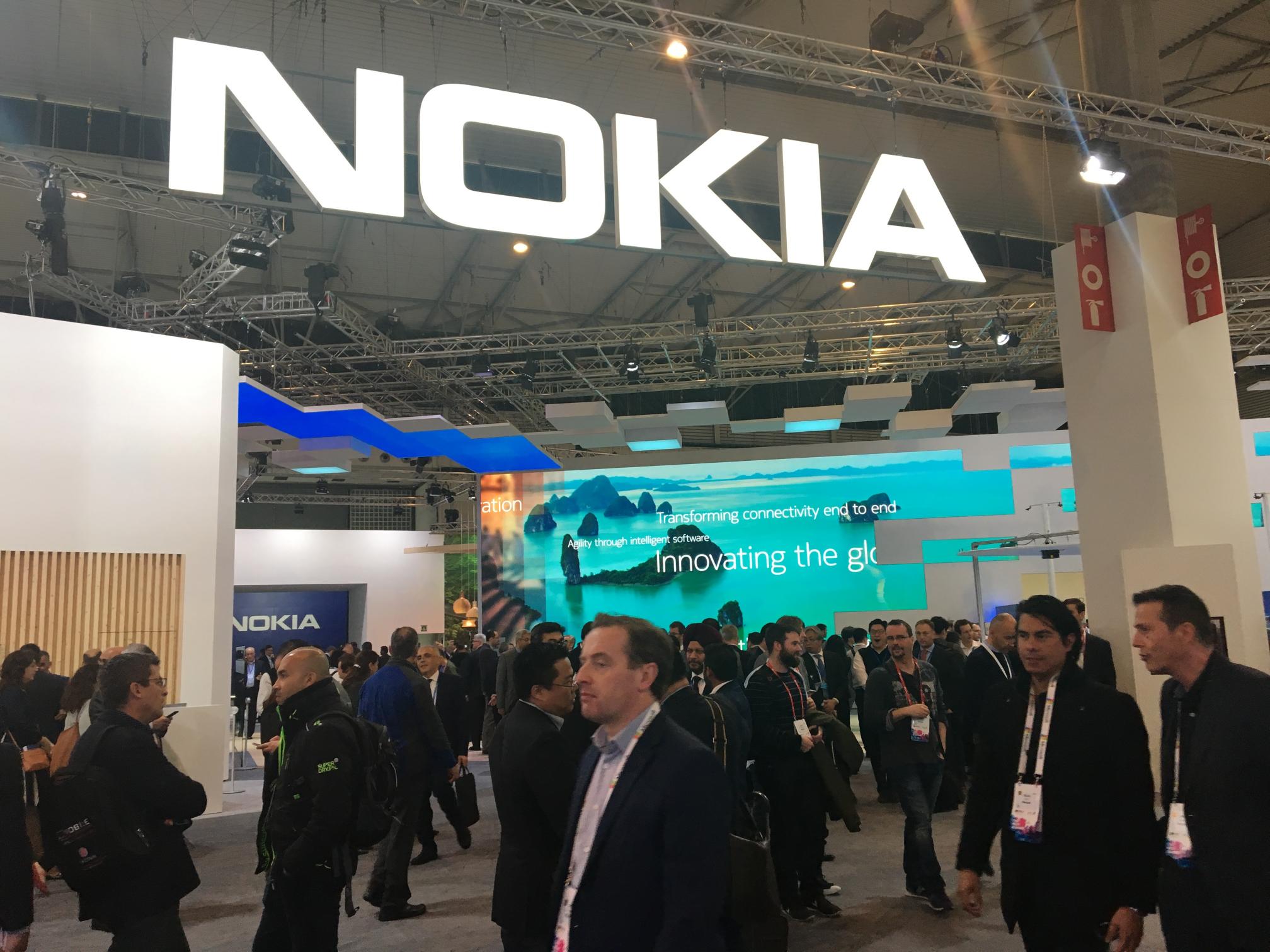
The trade show is back, and it has changed. Since the pandemic, in-person events have reclaimed their place at the heart of B2B marketing: 78% of event organisers name them their most impactful marketing channel (Event Marketer / Bizzabo). In 2025, Germany’s 304 trade fairs drew more than 12.7 million visitors (+1.9%) and around 192,000 exhibitors (AUMA). In Finland, visitors to Helsinki Expo and Convention Centre passed one million in 2025, up 13.7% from the previous year (Messukeskus).
But today’s visitors arrive with a different mindset. They come to discover and they want to get their hands on it:
Put together, this is a remarkable opportunity. Visitors walk up to your stand already informed and eager to go deeper. And the same buyers continue their journey online, on their own terms, after the show.
Interactive 3D serves both moments. At the stand, it lets visitors explore your product from the big picture down to the technical detail, even when the product is a ship, a production line or a quantum computer. After the show, the very same experience lives on your website and in your sales meetings, carrying your story wherever your buyers go.
That is the shift this guide is about: from a one-off exhibition build to a lasting product communication asset that launches with your product and keeps working for years.
What interactive 3D brings to your launch and stand
Buyers understand how your solution works and why it matters. Cutaways and X-ray views reveal what is normally hidden inside a machine or behind a wall.
Every visitor follows their own interests, from overview to specs, while your experts are free for the conversations that matter.
A large, explorable 3D model draws people in and gives your team a natural opening line.
Show products too large, too heavy, too dangerous or too new to bring to the hall, or ones that don’t physically exist yet.
Built-in analytics show which products and features attract the most interest.
The same 3D assets power your website, sales tools, videos and social content long after the event.
The 10 steps, from first idea to lasting impact
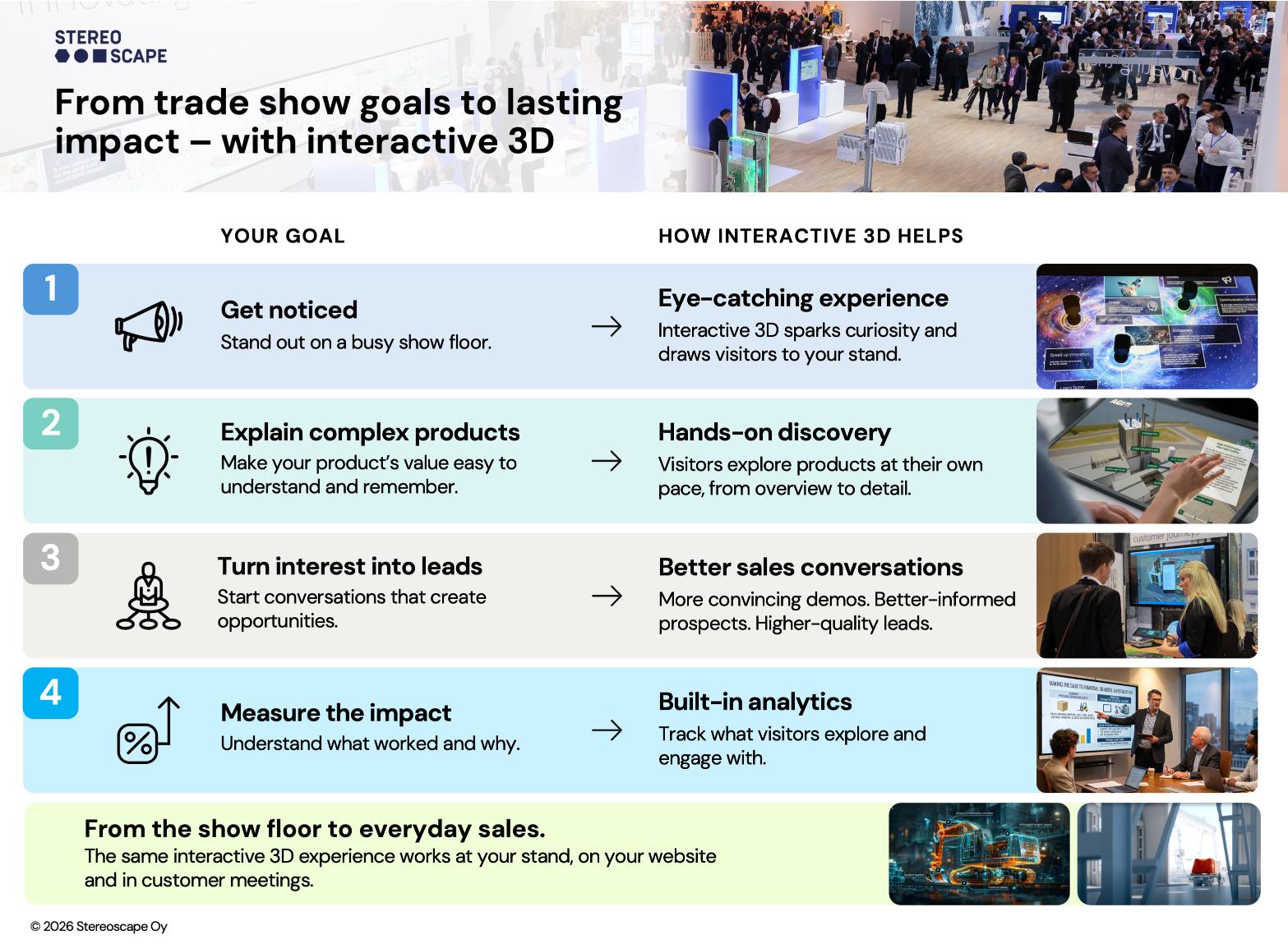
Set clear goals for the event and for the 3D experience
Great experiences start with sharp business objectives. Before you think about technology, agree on what success looks like.
- What is the event for? Visibility, new leads, deeper relationships with existing customers, a product launch, or all of these?
- Who do you want to reach? Technical decision-makers, procurement, end users and partners each need a different level of detail.
- How will you measure it? Think number of qualified leads, time spent at your stand, demo sessions run, follow-up meetings booked or traffic compared with competitors.
Then define the role of the 3D experience itself. Is it there to draw a crowd, to help your sales team explain a complex system, or to give visitors a self-guided product tour? Digital interactive content can include analytics from day one, so you can see exactly how visitors engage with your products and prove the return on your event investment. That matters: 70% of organisers report difficulty demonstrating ROI for in-person events (Event Marketer).
Bring sales and technical experts into the ideation
With clear goals in place, invite the people who talk to customers every day. Your salespeople, application engineers and product managers know which questions buyers ask, which features win deals and which concepts need the most explaining.
Their involvement pays off on the show floor too. Freeman found that 51% of attendees say access to a subject matter expert improves their purchase decision certainty (Associations Now). An interactive 3D tool designed with your experts becomes their perfect partner at the stand. Ask together:
- Which messages support both our sales conversations and our wider marketing strategy?
- What do we want every visitor to understand in the first 30 seconds and what can they discover in five minutes?
- Which questions do customers ask us most and which are the hardest to answer with words alone?
Show what a slide deck never could
The products that are hardest to explain often have the most impressive stories to tell. Interactive 3D turns those stories into experiences: buyers can look inside, zoom out to the big picture and see your product at work.
Interactive 3D delivers what a slide deck or brochure can’t:
- Scale: a complete production facility, vessel or infrastructure network, explored on a single screen.
- Inside views: cutaways, exploded views and X-ray modes that show how components fit and work together.
- Processes in motion: forces, flows and sequences animated step by step.
- Use cases: the product in its real operating environment, from the deck of a ship to a field deployment.
Case study
Outokumpu at ONS
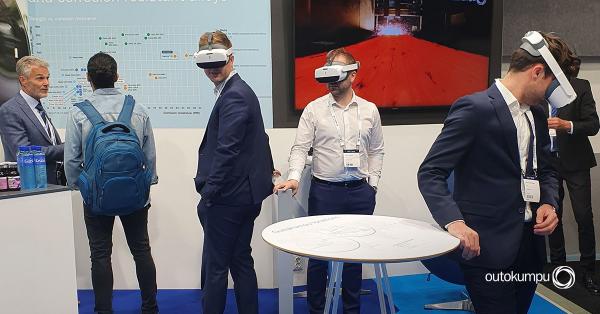
A steel mill is enormous, continuous and largely hidden inside equipment — almost impossible to explain at a trade fair. For the ONS energy fair in Norway, Stereoscape created a five-minute VR and 360° tour that takes visitors inside the mill and follows production stage by stage. Visitors stayed for the full experience, and the stand even drew local television coverage. A browser-based version served visitors without a headset and lives on after the event. View the case
Case study
AG International at IPPE 2026
AGI wanted visitors to grasp its large hog feed facility and how its sections connect. Stereoscape built a touchscreen-based interactive 3D showcase that lets visitors move from the big-picture overview into specific sections of interest, with an X-ray view that reveals even the hardest-to-explain parts. The result is a lead generation tool that can be reused across multiple events. View the case
Choose the right technology for the job
The best solution is the one that serves your goals, your audience and your stand — not the flashiest one. Here is today’s toolkit for B2B events and launches:
Case study
Maillefer
Maillefer, which builds machinery for undersea cable production, previously relied on lengthy slide decks to explain its products. It first considered VR, but Stereoscape recommended an interactive browser-based 3D sales and presentation tool that runs on any device with a browser. The outcomes include clearer sales meetings, faster customer decision-making, more consistent messaging across the sales team and greater visibility at events. View the case
Design for the show floor
A trade show is a demanding environment: noisy, busy and full of distractions. The experience must work in seconds, for anyone, with or without a guide.
- Layer the information. Start with a striking overview, then let visitors drill down into systems, components and specifications. The interactive layers of text, images, video and animation are just as important as the 3D model itself.
- Design for two modes. A self-guided mode for curious visitors, and a sales-led mode for focused presentations tailored to each customer’s interests.
- Think about the setup. A tablet driving a large screen lets a salesperson guide while a crowd watches. A standalone touchscreen invites visitors to explore on their own. A browser-based solution that runs offline adds peace of mind: no dependence on venue Wi-Fi, and easy backup on a second device.
- Keep it intuitive and accessible. Large touch targets, clear navigation and readable text from a distance. Ensure your branding is consistent with the rest of the stand.
Case study
Bluefors at the APS trade show
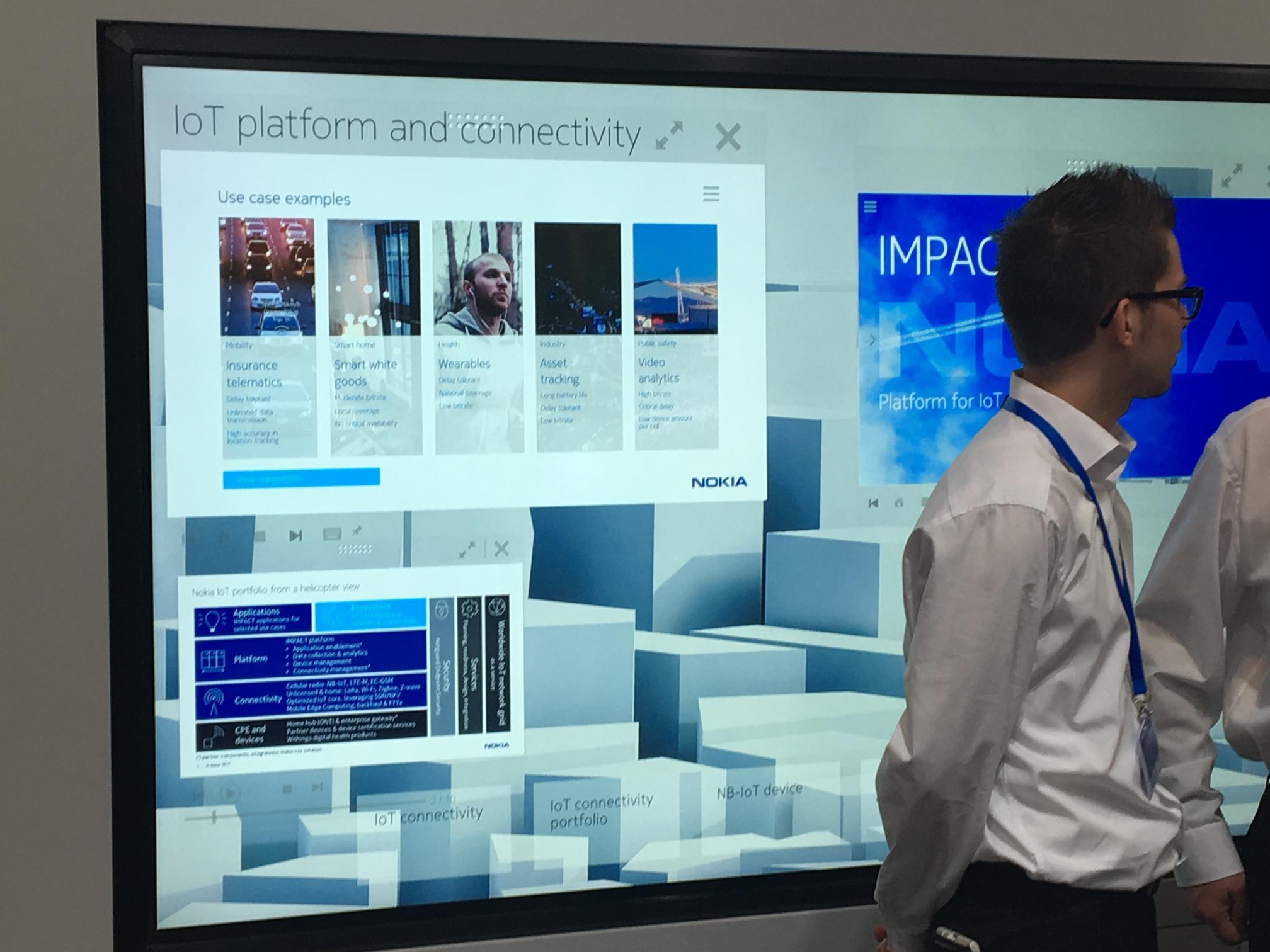
Bluefors needed to showcase two advanced quantum technology products, each with numerous features and technical specifications. Stereoscape created an interactive, browser-based 3D presentation that lets visitors explore the systems from a general overview down to the details they care about most. At the show, it ran on a tablet connected to a larger screen; afterwards, it can be embedded on the Bluefors website and used in everyday sales. As Bluefors put it, Stereoscape made their “demanding technical products easy to present and understand.” View the case
Case study
Dell at MWC Barcelona
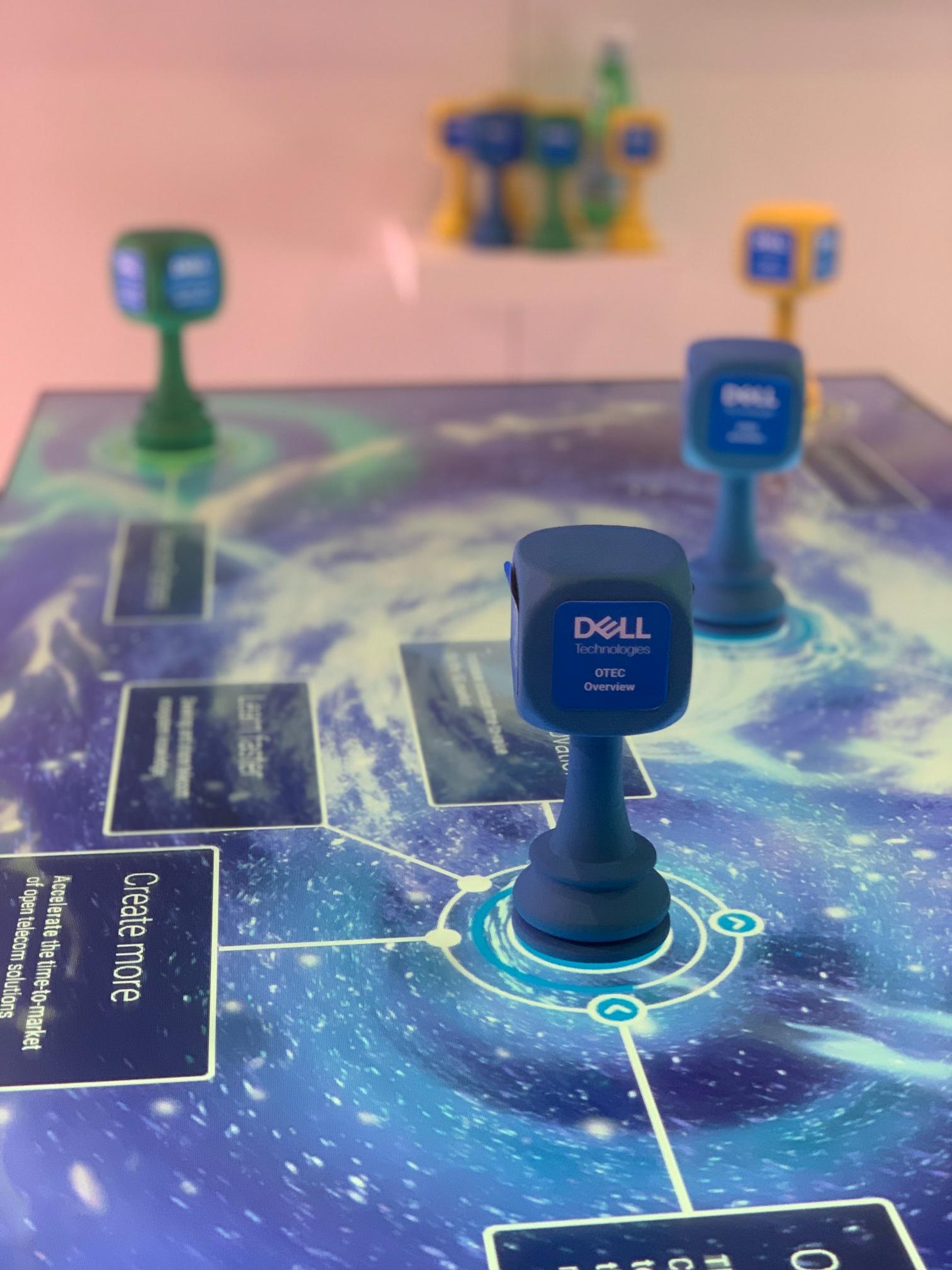
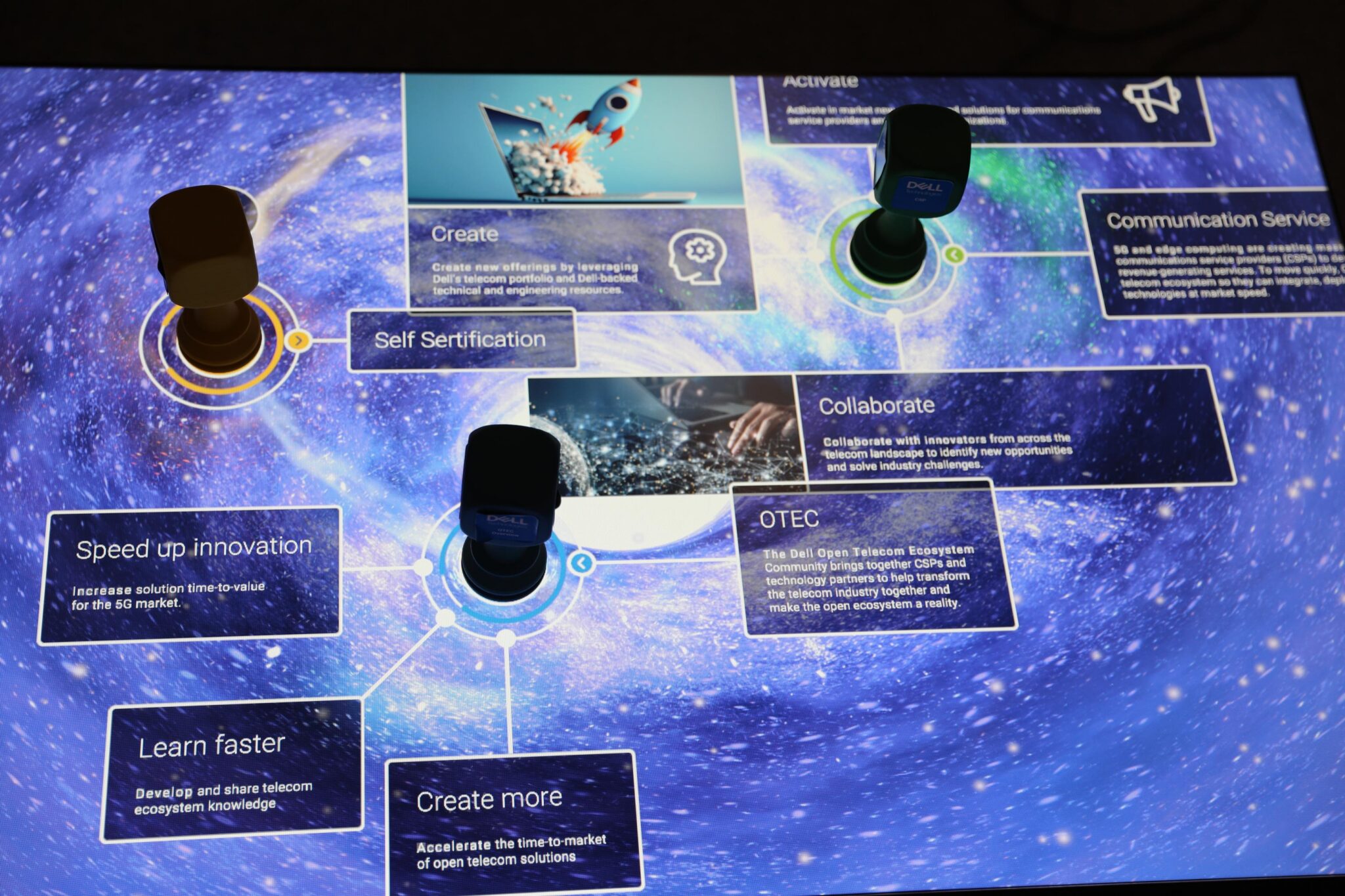
To communicate the benefits of an open telecom ecosystem, Stereoscape created a gamified, multi-user experience for a large MultiTaction touch table. Visitors played with the ecosystem’s building blocks using 3D-printed physical tokens that interact with the digital content. The table became a crowd magnet and helped Dell run over 50 demonstrations for its target audience in the first two days of the event. View the case
Plan the launch beyond the show floor
A product launch today is a campaign that runs before, during and after the event. Plan your interactive 3D content as one source that feeds every channel:
- Before the event: tease the launch with short 3D clips and renders on LinkedIn, in newsletters and in invitations. Ask the organiser whether they can promote your experience to attendees in advance. Interactivity, gamification and novelties are strong reasons to visit.
- At the event: use the interactive experience at the stand and an animation loop to stop passers-by.
- After the event: publish the experience on your website, share it in follow-up emails and equip sales with it for customer meetings.
Consistency matters to buyers. They notice when a supplier’s website and its sales team say different things. When your stand, website and sales team all use the same interactive 3D presentation, everyone tells the same story.
Case study
MacGregor
To communicate its technical Balance Lashing solution for container ships, MacGregor commissioned a high-quality 3D animation showing the system in action on a vessel. It is used to attract attention and generate leads at trade shows and on the website, and to explain the solution and validate technical claims in sales meetings. View the case
Choose an experienced partner
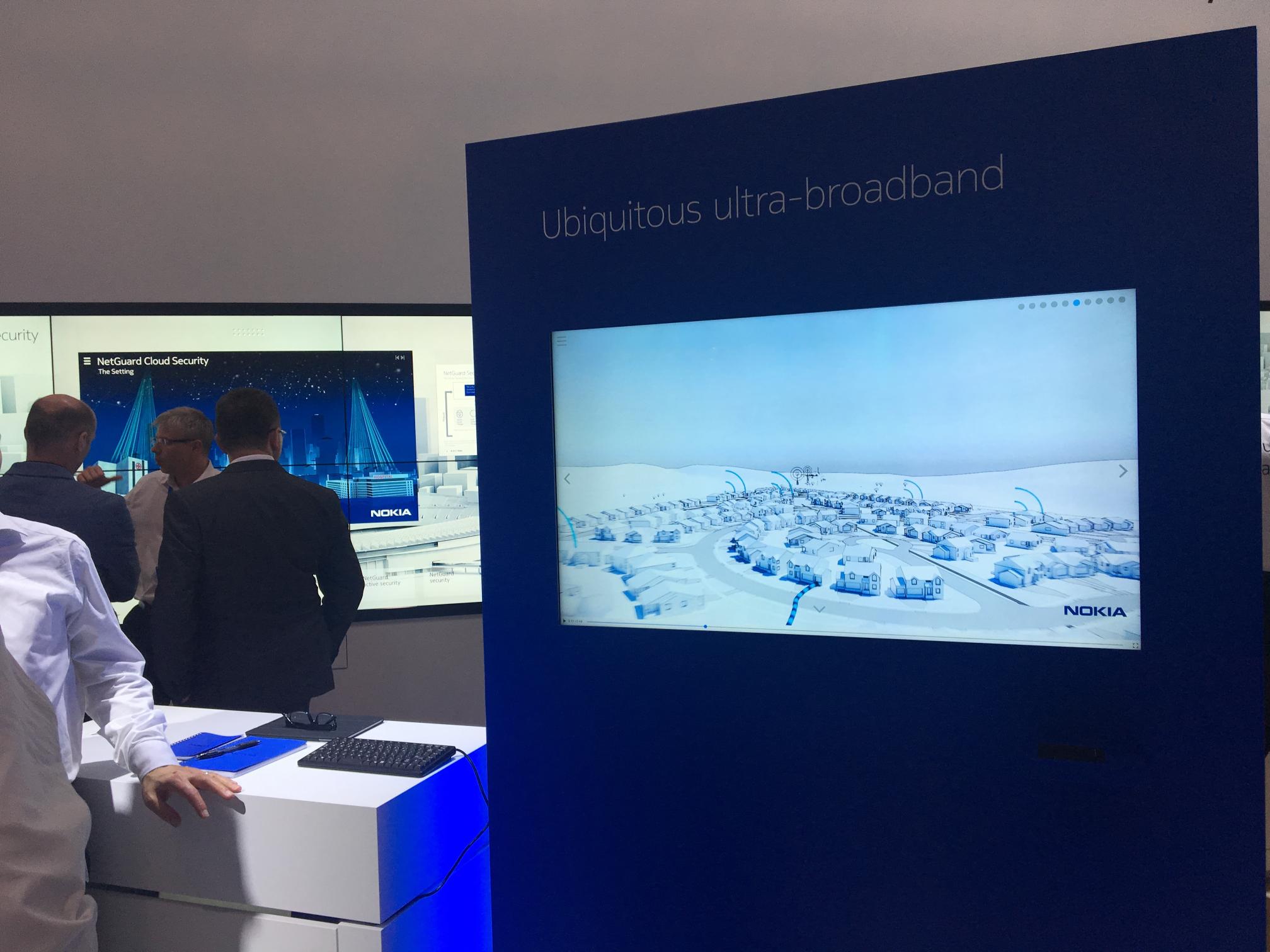
Interactive 3D brings together many disciplines: 3D modelling, UX and interface design, visual storytelling, software development, analytics and the project management to land it all on a fixed event date. Choose a partner who understands B2B marketing and sales as well as technology.
Look for a partner who:
- Can work directly from your CAD files and engineering data, keeping the product accurate down to the detail.
- Recommends the technology that fits your goals, even when it is not the one you first had in mind.
- Builds modular solutions that grow with your product portfolio.
- Thinks multichannel from the start, so every asset can be reused after the event.
Design the concept together, then build it in close collaboration
The concept phase is where the experience is won. At Stereoscape, every project begins with a joint workshop where we go through your goals, target groups, ideas and technology wishes together. Invite marketing, sales, product management and engineering, so the full picture is on the table. Alongside the creative and technical views, a skilled partner brings user experience expertise: Is the solution easy to use in a busy stand? Is it accessible to all users? How is it branded?
After the workshop, the partner creates a preliminary concept that you refine together into a final one. Depending on the scope, this takes from a few weeks to about a month.
Once the concept is agreed, regular check-ins during the build keep the project on schedule and within budget, and give your experts the chance to verify technical accuracy along the way. A modular structure means new products can be added later without starting over, and testing on the actual hardware you will use at the event avoids surprises.
Case study
EKE-Electronics
EKE-Electronics needed a new tool for communicating its product catalogue at business events. Stereoscape built an interactive real-time 3D train showroom demonstrating how EKE’s products integrate into trains and connect with each other. It runs offline on touchscreens at events and online on EKE’s website, and its modular design lets new products be added as the catalogue grows. The team delivered on a tight schedule and stayed on call for the first outing. Originally created for exhibitions, it has also become a valuable tool for EKE’s sales team. View the case
Measure, learn and follow up
After the event, turn engagement into insight. If analytics were built in, look at the numbers against the goals you set in step 1:
- Which products, features and use cases attracted the most interest?
- How long did visitors spend with the experience?
- Which hotspots and content layers were opened most often?
- How did the experience contribute to leads and booked meetings?
Combine the data with qualitative feedback from customers and your stand staff. Then hold a debrief with your partner: What sparked the best conversations? What could be even better next time? Use these insights to tailor your sales follow-up to what visitors found most interesting.
Keep your 3D working after the show
This is where interactive 3D truly outperforms a traditional stand build. The investment keeps paying off long after the hall closes.
- Sales meetings: the same presentation helps your team explain, compare and convince in every customer meeting, online or in person.
- Website: embed the experience so self-directed buyers can explore your products whenever they research.
- Marketing content: turn the 3D models into videos, renders, animations and social media content.
- Training and onboarding: help new employees, partners and distributors learn your products faster.
- The next launch: add new products to the modular platform instead of starting from scratch.
There is a sustainability benefit too. Reusable digital assets replace stacks of printed brochures and reduce the need to ship heavy products and demo units around the world.
Case study
KNL
For KNL, Stereoscape created an interactive experience showing use case scenarios of its CNHF Manpack for events and the KNL website and repurposed the product’s CAD files into a series of marketing videos and photos. View the KNL case
Technology is the enabler. The experience is what they remember.
Trade shows and product launches remain the place where B2B buyers come to see, touch and understand what is new. Interactive 3D lets you meet that expectation with every product you make, however large or hard to explain it may be.
The winning formula is simple: start from your goals, put your experts at the centre, design for the show floor, and build assets that keep working long after the event. Do that, and every stand visit can become the start of a lasting conversation with your customers.
Great products deserve smart communication.
Planning a product launch or your next trade show? Let’s talk about how interactive 3D can bring your products to life — or browse our latest projects for inspiration.
Sources
- Event Marketer: Research: 14 Datapoints on the State of the B-to-B Events Industry (Bizzabo 2025 State of Events)
- AUMA: Final statement for 2025 entirely positive: Strong growth among international audiences
- Messukeskus: A strong year for The Finnish Fair Corporation – revenue reached an all-time high
- Associations Now: Report: Exhibitors Need to Step Up Interactivity (Freeman, Unpacking XLNC: The Future of Commerce)
- Exhibitor Online: New Freeman Trends Report Reveals What Really Matters to Attendees
- Trade Show Executive: Freeman Trends Report Reveals Experience Serves as Multiplying Factor Rather than a Core Objective for Attendees
- Exhibitor Online: New Freeman Trends Report Finds Attendees Want More Event Learning to Happen Outside the Session Room
- Gartner: Gartner Sales Survey Finds 67% of B2B Buyers Prefer a Rep-Free Experience
- Gartner: Gartner Survey Finds 69% of B2B Buyers Turn to Sales Reps to Validate AI-Generated Insights


